
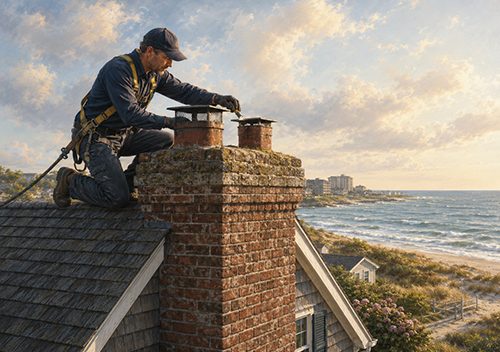
Along the coast of Long Branch, the homes seem to live inside their own story.
Some are old shore houses with narrow staircases, brick fireplaces, and memories tucked into every corner. Some are newer homes with gas fireplaces, modern heating systems, and clean rooflines facing the Atlantic. Others sit quietly on side streets, catching salt air in the morning and damp breezes at night.
From the outside, each home tells a different tale. But up on the roof, where the chimney stands guard, many of those stories begin to sound the same.
In Long Branch, a chimney does more than release smoke. It battles wind, salt, moisture, temperature swings, and seasonal use. That is why Long Branch chimney service is not just another item on the home maintenance list. For many local homeowners, it is one of the most important ways to protect the comfort, safety, and long-term condition of the home.

The Chimney That Faced the Sea
Imagine a chimney standing tall above a Long Branch home near the ocean. Each morning, salty air drifts in from the coast. Some days it arrives softly. Other days it rides in on a hard wind. The chimney does not complain. It simply takes the weather, year after year.
Brick, mortar, flashing, caps, crowns, and liners all face this same environment. Over time, moisture can creep into small cracks. Salt air can speed up wear on metal components. Wind-driven rain can find weak spots around the chimney crown or flashing. When winter comes, trapped moisture can freeze and expand, making tiny flaws grow larger.
That is one reason homes in coastal communities often need closer attention than homes farther inland. A chimney in Long Branch may experience more moisture exposure and harsher roofline conditions than one in a more sheltered neighborhood. The damage may start quietly, but the longer it goes unseen, the more expensive the story can become.
This is where Baron’s Chimney Service can become part of the homeowner’s yearly rhythm. A professional inspection can reveal warning signs before they turn into leaks, odors, drafting issues, or structural concerns.
The House That Only Used Its Fireplace Occasionally
On another street in Long Branch, there is a family that only uses the fireplace during holidays and the coldest weekends of winter. They think, “We barely use it. I’m sure it’s fine.”
That sounds reasonable. Unfortunately, chimneys do not only age when fires are burning.
A chimney can develop issues even when it sits unused. Birds, leaves, and debris can block the flue. Moisture can enter through a cracked crown or missing cap. Old soot and creosote can remain inside the system. A fireplace that looks clean from the living room may still hide problems above the damper or inside the flue.
That is why annual chimney inspections are widely recommended for fireplaces, chimneys, and vents. The Chimney Safety Institute of America provides homeowner resources and explains inspection levels, including routine Level 1 inspections for systems that are being maintained under normal use.
For Long Branch homes, this matters even more because occasional use often combines with heavy coastal exposure. A fireplace may sit idle for months while the chimney continues facing ocean air, storms, humidity, and seasonal temperature changes.
The Wind That Changed the Draft
One chilly evening, a homeowner lights the first fire of the season. The fire catches, the room begins to glow, and then something feels wrong. Smoke does not rise the way it should. A faint odor creeps into the room. The fire seems sluggish.
The villain in this chapter could be poor draft.
Long Branch homes can face unique drafting challenges because of wind patterns near the coast, roofline design, nearby buildings, and chimney height. A chimney must create the right upward pull to move smoke and gases safely out of the home. If something blocks the flue, damages the liner, changes airflow, or affects the chimney opening, the system may not perform properly.
Sometimes the issue is simple, such as a blockage or buildup. Other times it involves chimney design, deterioration, or missing protective parts. Either way, a professional Long Branch chimney service visit can help identify what is happening before the fireplace becomes frustrating or unsafe to use.
The Crown, the Cap, and the Rainstorm
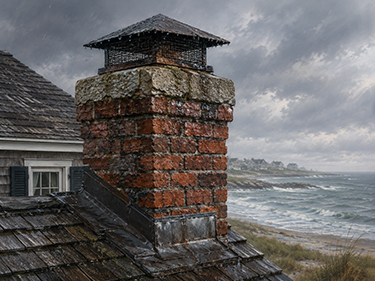
Every good story has supporting characters. In a chimney story, two of the most important are the chimney crown and chimney cap.
The crown sits near the top of the chimney and helps shed water away from the masonry. The cap helps keep rain, animals, leaves, and debris out of the flue. When these pieces are damaged, missing, or poorly fitted, the chimney becomes vulnerable.
In a town like Long Branch, rain rarely needs an invitation. Wind can push water sideways. Storms can test weak flashing. Damp ocean air can linger around masonry long after the sky clears.
A missing chimney cap may allow water to enter directly into the flue. A cracked crown can let moisture work into the masonry. Damaged flashing can allow water to sneak into the roofline, where it may eventually show up as ceiling stains, wall damage, or musty odors.
The Older Shore Home with a Hidden Past
Long Branch has homes with character. Some have been updated many times while others still carry older construction details. A fireplace may have changed owners, fuel types, liners, appliances, or usage patterns over the decades.
That history matters.
Older chimneys may have deteriorated mortar joints, outdated liners, hidden cracks, or previous repair work that no longer performs as intended. A home inspection during a sale may catch some issues, but ongoing chimney service is still important after the home is purchased.
A chimney is a system. The masonry, liner, damper, smoke chamber, crown, cap, flashing, and fireplace opening all need to work together. One weak part can affect the rest.
For homeowners in Long Branch, especially those with older shore homes, chimney service offers peace of mind. It helps answer the important questions: Is the flue clear? Is the masonry sound? Is moisture getting in? Is the system ready for another heating season?
Long Branch Chimney Service Should Be Seasonal, Not Occasional
Inland homeowners may think about chimney care only when they notice a problem. Long Branch homeowners should think a little differently.
The coastal setting gives chimneys more to endure. Salt air, humidity, storms, wind, and freeze-thaw cycles can all shorten the time between maintenance needs. Add in older housing stock, seasonal occupancy, and fireplaces that may sit unused for long stretches, and the need for regular service becomes clearer.
The best time to schedule chimney service is before the first cold night when everyone suddenly wants to use the fireplace. Spring and summer inspections can also be helpful because they give homeowners time to address moisture damage, masonry issues, or repairs before fall arrives.
A Safer Ending for the Home with Long Branch Chimney Service
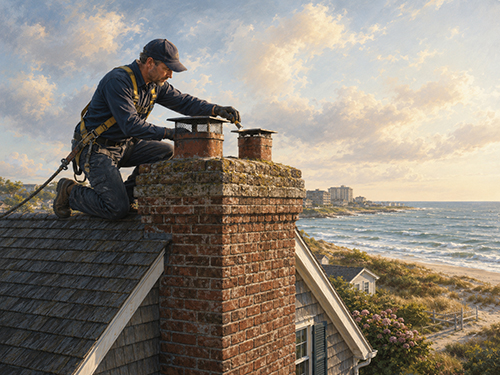
At the end of our Long Branch chimney story, the hero is not the fireplace, the flue, or even the chimney itself. The hero is the homeowner who pays attention before trouble appears.
A well-maintained chimney helps protect the home from smoke problems, moisture damage, animal entry, masonry deterioration, and performance issues. It can also help homeowners feel more confident when they light a fire on a cold evening, knowing the system has been checked by someone who understands what to look for.
For residents of Long Branch, chimney care is not only about owning a fireplace. It is about owning a home near the coast, where weather has a stronger voice and small problems can become bigger stories if ignored.
If your home is near the water, exposed to wind, older in construction, or simply overdue for attention, scheduling Long Branch chimney service with Baron’s Chimney Service is a smart next chapter.